


Most secateur regrets begin the same way: a thick, dead branch that has to come off, a shiny pair of bypass secateurs in your hand, and a blade that slides sideways instead of biting. A minute later you are pressing down with both hands, the cut is ragged, and the shrub looks worse than it did. The blade was not blunt. It was simply the wrong design for that stem. Learning why anvil and bypass secateurs behave so differently makes pruning quicker, cleaner, and far kinder to your hands.
How the two cutting actions differ
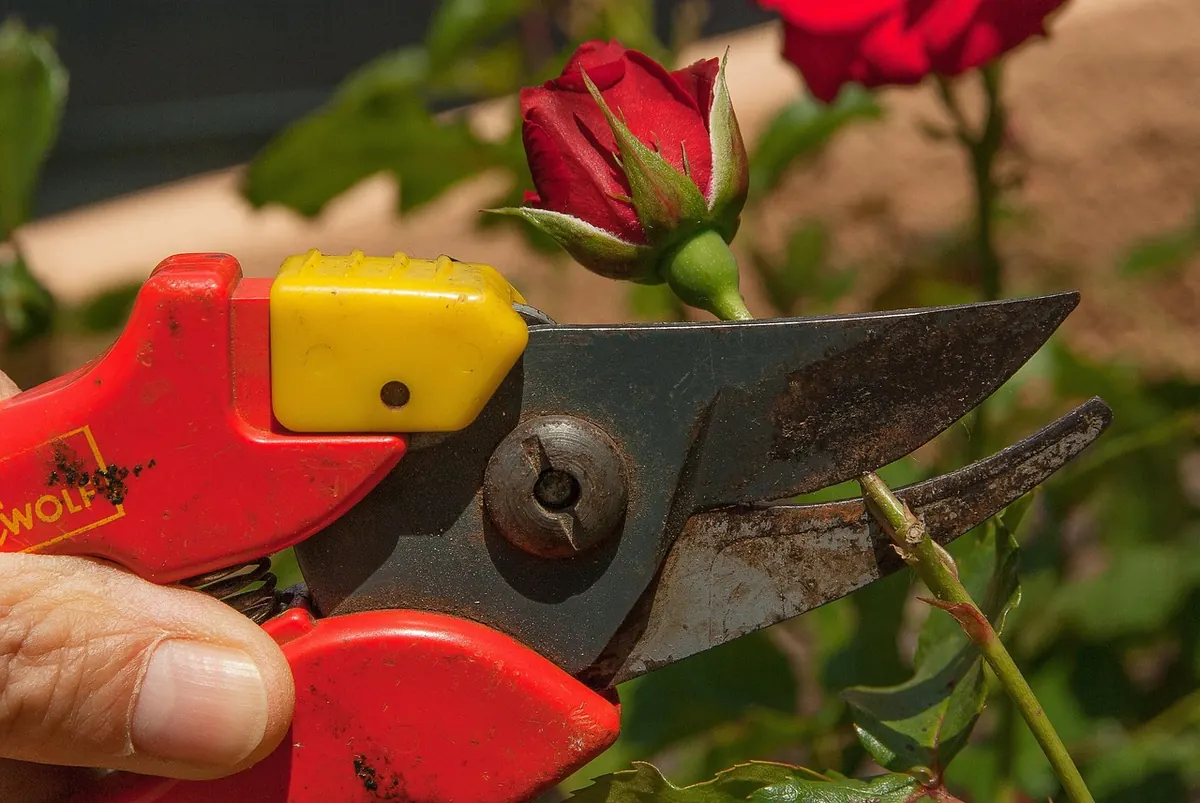
Bypass secateurs work like scissors. One sharp, curved blade sweeps past a second, unsharpened blade, slicing through the stem. It is a clean cut, which is why bypass pairs are the default choice for living growth.
Anvil secateurs work like a chisel on a chopping board. A single sharp blade comes down onto a flat, softer metal bed — the anvil — and severs the stem by pressing it against something solid. Nothing passes anything, so the mechanism cannot jam and the blade can be thick and strong. The trade-off is that the stem is bruised on the side resting on the anvil.
What anvil secateurs do well
Bruising sounds like a flaw, and on living wood it is. But a good deal of garden pruning involves material that is already dead. Dry, brittle stems, old bramble canes, dead wood on fruit trees, withered flower stems and tired woody growth all cut well against an anvil. A bypass blade tends to push dry stems away rather than cut them, and may snap the stem ahead of the blade. An anvil blade holds the wood still and gets on with it.
Anvil pairs also tend to have a robust, uncompromising feel, with thicker blades and less delicate adjustment. Many gardeners find the action comfortable for sustained clearing work, because the cut finishes firmly on the bed rather than depending on a precise slicing clearance. For renovating a neglected corner — ivy, brambles, dead shrubs, dry stems — the anvil design makes sense.
Where it does not make sense is at a plant you are trying to keep. A bruised cut on living wood heals slowly and gives disease an opening.
Where bypass secateurs earn their place
For routine pruning, bypass wins almost every time. Roses, shrubs, soft fruit bushes, fruit trees, climbing plants, herbs and cut flowers all cut cleanly with a slicing action, and the wound that remains calluses over more neatly.
Precision matters too. Most pruning cuts want to be made just above a bud or a leaf node, at a slight angle, so the plant can seal the wound and grow away from it. A bypass blade lets you slide into a tight fork in the branches and place the cut exactly where you want it. An anvil blade, with its flat bed, is harder to tuck into a crowded framework without bruising the bark around the cut.
If you are buying one pair of secateurs and only one, buy bypass.
Matching the tool to the job
- Living, green stems up to roughly your thumb thickness: bypass.
- Dead, dry or brittle branches: anvil.
- Brambles, ivy and woody weeds: anvil, where a bruised stem does not matter.
- Shaping a plant or cutting back to a bud: bypass, for accuracy and a clean wound.
- Cut flowers and herbs: bypass, or smaller floral snips, so the stems do not bruise.
- Anything thicker than the tool's stated capacity: loppers or a pruning saw. Forcing any pair of secateurs too far open is how handles snap.
- Rough clearance where you cannot see the blade: anvil, since a chipped slicing edge is disappointing and a chipped anvil blade is merely annoying.
Looking after the blade
Bypass
Sharpen only the bevelled outer edge, matching the existing angle with a fine diamond file or whetstone. Never file the flat inner face of the blade; that surface is what lets the two blades pass each other closely, and once it is rounded the tool starts chewing stems instead of cutting them. Clean sap off after each session with warm soapy water and a cloth, dry thoroughly, and wipe the blade with a little oil.
Anvil
File the single bevelled blade on its bevel side. Then look at the bed. If it is deeply scored or grooved, the blade cannot meet it cleanly and stems will be crushed rather than severed; the bed can be replaced on many models, or dressed flat with a file if you are confident doing so. Keep grit out of the bed.
A few habits make both types last longer:
- Sharpen little and often rather than waiting for the tool to blunt badly.
- Adjust the central pivot so the blades meet with a light drag — not rattling loose, not stiff.
- Use the locking catch every time you put them down; blades lost in long grass cost fingers.
- If you have been cutting diseased wood, wipe the blades with disinfectant or methylated spirits and let them dry before moving on to healthy plants.
- Replace worn springs and rubber buffers rather than putting up with a floppy action.
Hand comfort and grip
An uncomfortable pair will be left in the shed, so it is worth handling tools before you buy. Grip circumference matters as much as anything: small-handed gardeners often get on better with compact handles, and a heavy pair becomes tiring after twenty minutes of cutting. Rotating handles reduce friction during long sessions, and ratchet secateurs use a staged gearing that suits anyone who struggles to generate force with a single squeeze.
Anvil secateurs have one small advantage here: because the blade meets a central bed, they are more or less ambidextrous. Bypass designs are handed, though some models offer a reversible blade for left-handed use.
Whatever you choose, keep your wrist straight, cut with a smooth squeeze rather than a twist, and take thicker stems in stages or move up to loppers. If you have arthritis, a long-standing wrist injury or numbness in your fingers, speak to your GP or a physiotherapist before a serious pruning session rather than working through the pain.
The practical answer
Most UK gardens can be pruned from start to finish with a good pair of bypass secateurs, and the anvil pair stays in the shed for dead wood and clearance. If your pruning is mostly brambles, dry stems and neglected corners, the balance flips. Either way, buy the pair that fits your hand, keep the edge sharp, and match the tool to the stem in front of you. Your plants, and your forearms, will notice the difference.
Photo: jackmac34 / Pixabay